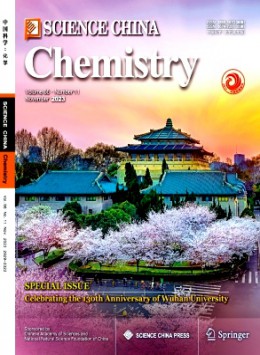
如何縮短《Science China Chemistry》雜志的審稿周期?
來源:優(yōu)發(fā)表網(wǎng)整理 2025-12-15 15:06:26 12169人看過
想要縮短《Science China Chemistry》雜志的審稿周期需要作者、編輯部和審稿人等多方面的共同努力,作者可以采取一些有效措施,間接地加快審稿進(jìn)度,提升稿件的處理效率。
建議如下:
一、提高論文質(zhì)量
(1)嚴(yán)格遵循投稿要求:在投稿前,仔細(xì)閱讀《Science China Chemistry》雜志的投稿指南,包括格式要求、字?jǐn)?shù)限制、參考文獻(xiàn)格式等。確保稿件符合雜志的規(guī)范,避免因格式問題被退回修改,從而耽誤時(shí)間。
(2)提高論文質(zhì)量:確保論文的研究?jī)?nèi)容具有創(chuàng)新性和學(xué)術(shù)價(jià)值,數(shù)據(jù)準(zhǔn)確,論證嚴(yán)謹(jǐn),語言表達(dá)清晰流暢。高質(zhì)量的稿件更容易通過初審,進(jìn)入同行評(píng)審階段。
二、選擇合適的投稿時(shí)機(jī)
(1)關(guān)注期刊審稿周期:在投稿前,了解《Science China Chemistry》雜志的審稿周期(預(yù)計(jì)1-3個(gè)月)和發(fā)表周期(月刊),以便合理安排投稿時(shí)間。
(2)關(guān)注期刊動(dòng)態(tài):了解期刊的專題征稿或熱點(diǎn)話題,針對(duì)性地投稿,可能獲得優(yōu)先處理。
三、與編輯部保持良好溝通
(1)主動(dòng)了解審稿進(jìn)度:如果超過預(yù)計(jì)的審稿時(shí)間仍未收到回復(fù),可以禮貌地向編輯部發(fā)送郵件,詢問稿件的審稿進(jìn)度。
(2)尊重審稿意見:認(rèn)真對(duì)待審稿意見,積極修改論文中的不足之處,共同探討論文的改進(jìn)方向。
需要注意的是,縮短審稿周期的前提是保證稿件的質(zhì)量,不能為了追求速度而犧牲學(xué)術(shù)嚴(yán)謹(jǐn)性。
《Science China Chemistry》雜志創(chuàng)刊于1950年,是由中國科學(xué)院主管、中國科學(xué)院主辦的學(xué)術(shù)理論月刊。國內(nèi)刊號(hào)CN:11-5838/O6,國際刊號(hào)ISSN:1674-7224。該雜志以推動(dòng)科技改革與發(fā)展、探索科技規(guī)律為宗旨,致力于為科技工作者、研究者和管理者提供一個(gè)學(xué)術(shù)交流的平臺(tái)。
《Science China Chemistry》雜志投稿建議:
Manuscript submission
Please provide in a cover letter the background, innovative and scientific value of the work presented in the manuscript, and authors’ publications related to this work. The detailed contact information of the first author and corresponding author is re-quired. (Please promptly inform the editorial office of any change of contacting emails and addresses.) The authors may
recommend 3–8 qualified reviewers and/or request the exclusion of specific reviewers. An informative cover letter is considered helpful for editors and reviewers to make evaluation of the sub-mitted manuscript.
Duplicate submission is forbidden and unethical. In such cases, the journal will inform the institution of the authors and the relevant journal(s).
Poor English expression of a submitted manuscript may lead to rejection.
Ethical responsibilities of authors
This journal is committed to upholding the integrity of science and the scientific record. As a member of the Committee on Publica-tion Ethics (COPE), the journal will follow the COPE guidelines on how to deal with potential acts of misconduct.
Authors should refrain from misrepresenting research results which could damage the trust in the journal and ultimately the entire scientific endeavor. Maintaining integrity of the research and its presentation can be achieved by following the rules of good scientific practice, which includes:
1.The manuscript has not been submitted to more than one journal for simultaneous consideration.
2.The manuscript has not been published previously (part-ly or in full), unless the new work concerns an expansion of previous work. (Please provide transparency on the re-use of material to avoid the hint of text-recycling (“self-plagiarism”).)
3.A single study is not split up into several parts to in-crease the quantity of submissions and submitted to var-ious journals or to one journal over time (e.g., “sala-mi-publishing”).
4.No data have been fabricated or manipulated (including images) to support the conclusions. Upon request au-thors should be prepared to submit relevant documenta-tion or data in order to verify the validity of the results. This could be in the form of, e.g., raw data, samples, and records.
5.No data, text, or theories by others are presented as if they were the authors’ own (“plagiarism”). Proper acknowledgements to other works must be given, in-cluding material that is closely copied (near verbatim), summarized and/or paraphrased. Quotation marks are used for verbatim copying of material, and permissions need to be secured for material that is copyrighted.
Important note: The journal may use software to screen for plagiarism.
6.Consent to submit, including each version of the paper and any change in authorship, has been received from all co-authors and responsible authorities at the institute/ organization where the work has been carried out before the work is submitted or re-submitted for publication. In addition, authorship changes or the order of authors are not accepted after acceptance of a manuscript. Requests to add or delete authors at the revision stage or after publication is a serious matter, and may be considered only after receipt of a written approval from all authors and detailed explanation about the role/deletion of the new/deleted author. The decision whether to accept the change rests with the Editor-in-Chief of the journal.
7.Authors whose names appear on the submission have contributed sufficiently to the scientific work and there-fore share collective responsibility and accountability for the results.
聲明:以上內(nèi)容來源于互聯(lián)網(wǎng)公開資料,如有不準(zhǔn)確之處,請(qǐng)聯(lián)系我們進(jìn)行修改。